Dear reader,
The criteria we use to assess other people are an extension of what we call our identity, thereby making us clash with people that are different. But what are the moral and intellectual criteria that are being used to decide that a certain individual, certain literature, or a certain group of people is no longer the norm? Can we actually cancel people on moral grounds?
In this personal content hub, you will find various articles to provide some background on the topic. This hub also contains the agenda, instructions on how to join the round table, and the key questions we would like to discuss. Our virtual round table will take place in Dutch. Since the materials on this content hub were created by our international team of analysts, the preparatory materials are in English.
I am looking forward to meeting you.
Best regards,
Matthias Smalbrugge
Welcome!

Introduction by Matthias Smalbrugge
In preparation for our round table, Matthias Smalbrugge introduces the topic of Cancel Culture.

Cancel culture: An introduction
Historically a tool for social justice accountability, cancel culture has transformed into an ideological tactic that has put freedom of speech and the academy into question.

Cancel culture at the academy
Cancel culture has arguably existed for a long time, but over the past few years, it has impacted public life significantly. The academy has been one of the most impacted public institutions.
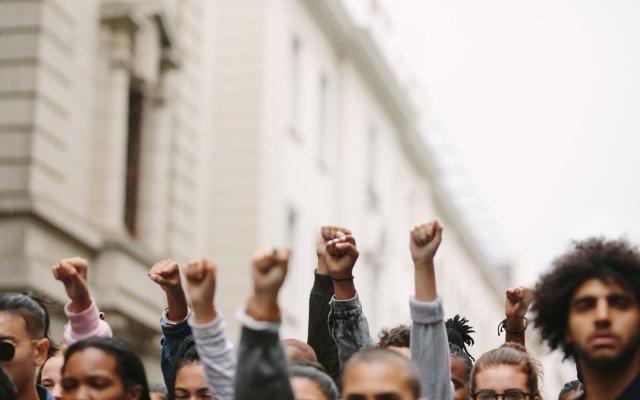
Crying wolf: A parable for cancel cultures
Can we cancel the concept of cancel culture altogether? To find out, we look at moral and intellectual criteria for knowledge.

Mechanics and logics of cancel culture
How do cancel cultures work? What is the logic behind them? In order to understand, we should look at the underlying mechanics and logics of cancel cultures involved in two major forms of them: institutional and technological cancel cultures.

Questions for discussion
Based on the background articles above, we would like to discuss three questions with you during our virtual round table.
Attendees
Who will be attending?

Floris van den Berg
Universiteit Utrecht
Universitair docent
Matthias Smalbrugge
Vrije Universiteit Amsterdam
Hoogleraar
Yvonne van Sark
Youngworks
Partner
Hans Boutellier
Vrije Universiteit Amsterdam
Hoogleraar
Bert Jan Lietaert Peerbolte
Vrije Universiteit Amsterdam
Hoogleraar