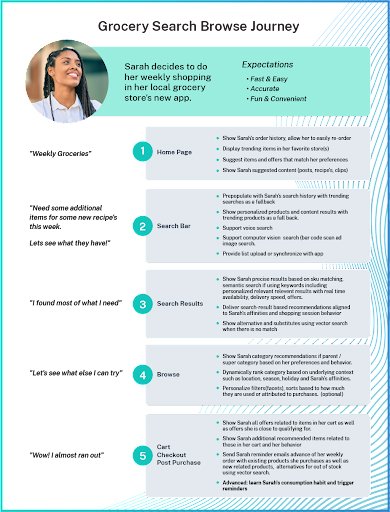
40% of shoppers say online is better than in-person at helping them discover new products, according to The Food Industry Association6. When shoppers are not quite sure of what items they need, all that the store carries, or what they are called (such as keywords to use) they will lean more on navigation and browsing. This mirrors the behavior shoppers exhibit perusing store aisles. The digital experience can elevate that of the stores through dynamically personalized navigation and browsing experiences using search. These drive a more empathetic experience that listens and adjusts to the shoppers' intent, such as reshuffling aisles based on the shoppers' diet and ingredient preferences. Introducing recommenders and chatbots through browsing simulates the in-store experience as shoppers frequently interact with other shoppers as well as store floor staff to get recommendations. These can be influenced by the individual shoppers' intent signals and those of other similar shoppers. You also want shoppers to find your products on external search engines. For example, smart enrichment can be used to augment the depth of information on navigation and browse pages for a specific item or category. Vector search and recommenders can also be used to nudge based on store-specific targets, such as relevant house brands or generics as substitutes based on the shopper’s browse patterns. This is particularly valuable in the era of rising costs and the growth of cost-conscious consumers.
Provide a rich set of information to help the shopper make a decision which may include not only that of the manufacturer but also from the community of users. This does more than help the shopper – it aids in shoppers finding your products organically on search engines. Machine learning models can marry shopper signals with the underlying information provided to them (such as ingredients and recipes) to inform models such as recommenders and personalization–and to generate insights. These signals can arrive from third-party sources such as diet and health/fitness apps if the shopper gives permission for sharing.
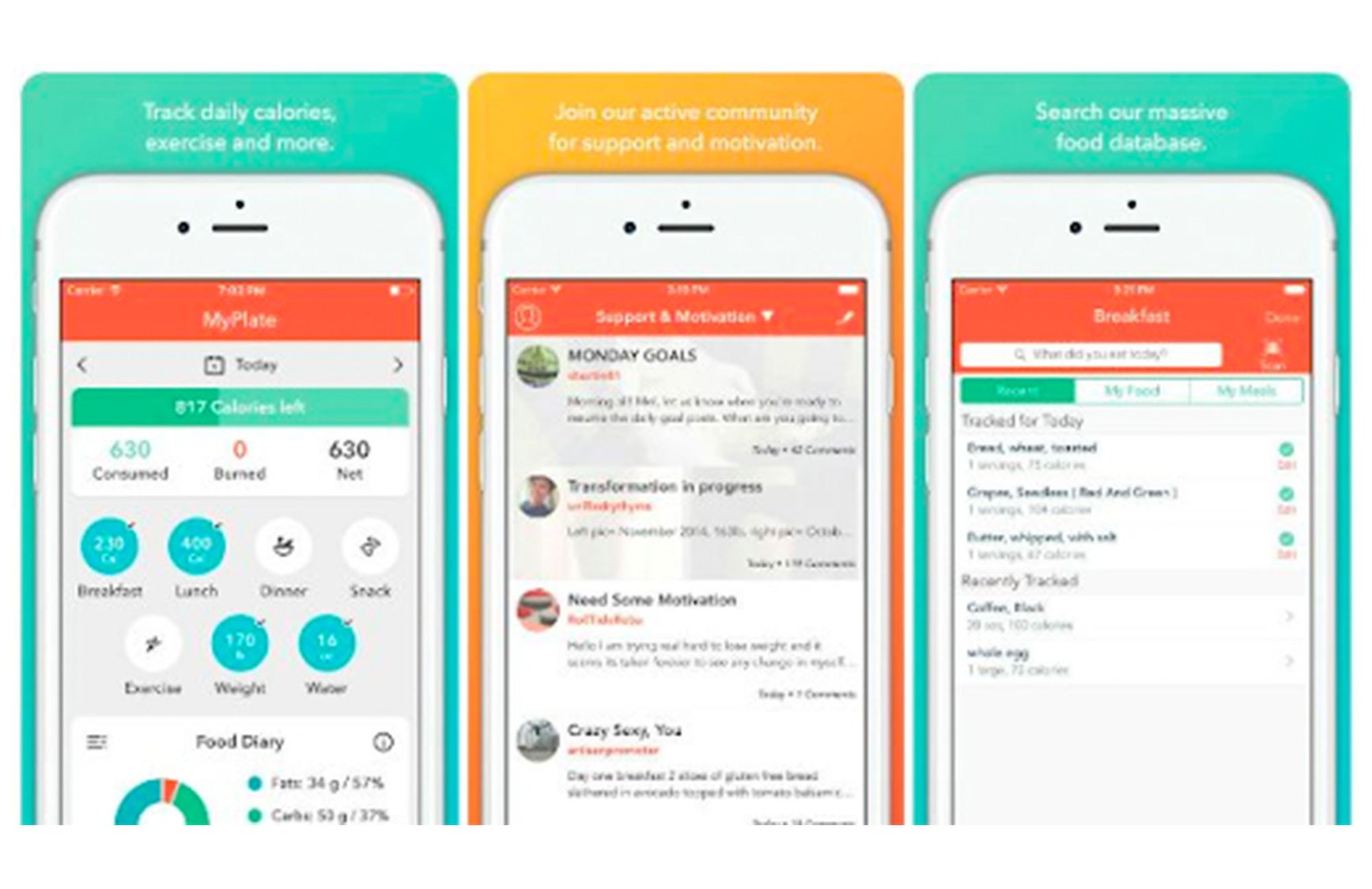
Below are examples of common data points such as calorie count, carb and fat intake, and diet goals being followed in apps.
Datapoints can also be extracted from nutrition and recipe labels using ML based entity detection and topic extraction. This eliminates the need for traditional data manipulation and enrichment mainly when product attributes and details are sparse. User-generated content such as reviews, posts, and videos can also be valuable sources to supplement the knowledge available around the product.
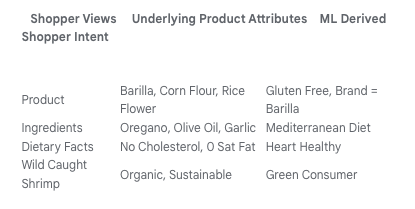
Pairing signals with entity detection and available product attributes can yield shopper intent. This can be used to drive individual real time relevance such as the sorting of products based on affinity to ingredients:
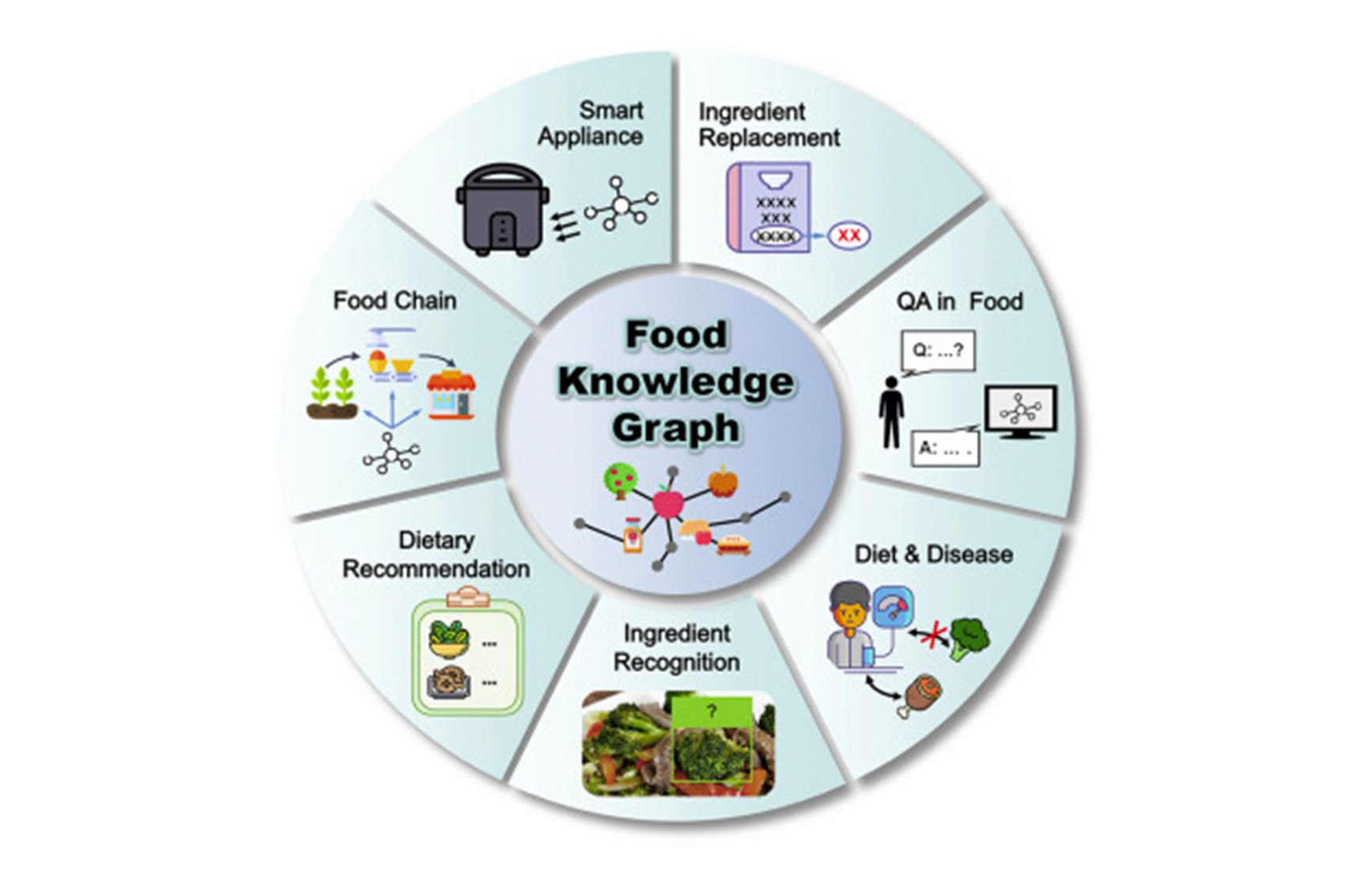
Search engines can be pre-trained with knowledge graphs such as a food knowledge graph so it is already aware of the relationships between entities and topics for the given market. This can also be used to generate additional labeling and tagging for product enrichment. Diet plans such as Keto, Dash, Mediterranean, and Vegan can be managed in these graphs for use across the shopper journey. This can also help surface items to the shopper they may have not considered or are aware of driving both conversion and revenue. Deep learning technologies such as computer vision can be applied to user-generated images, such as photos of plates, to extract trends to enrich search.
Vector search can be applied to present items based on their topical distance. In grocery this would mean finding alternatives to out-of-stock items based on the query, or complimentary items to a query such as meal or recipe detection. While vector search is primarily driven by keyword input, recommendations would generally be based on the underlying result such as a landing page, product detail page, or shopper states such as what is in their cart.
Search should align to the shopper based both on their current behavior and if their given preferences are available. As discussed in the Informative section, marrying shopper signals to underlying data points such as ingredients, nutrition, and product details will provide preference and affinity data to incorporate into how results are shown. Inference models using knowledge graphs including diet data and corresponding collaborative shopper behavior can be used to detect a specific diet plan the shopper is following. Individual preferences shared through a profile, such as allergies and dietary restrictions, can also be used to filter results so irrelevant products are not shown. Personalization is shown to have a significant positive impact when applied across the search journey. The diagram below shows some common practices of employing personalization in grocery:
It’s all in the presentation
Presentation is equally important whether it is a meal or an experience. While the focus has been on underlying results shown to shoppers, it is important to focus on the presentation of those results. For example, highlighting ingredients important in the shopper's decision in results can dramatically assist in decision making. If the shopper named specific ingredients in their search, the results are significantly more usable when those ingredients are highlighted. If the shopper’s preferences or inferred affinity to specific features of the product are used they should be highlighted as well. App and page real estate is limited, ordering results and navigation based on utility to the user, therefore, becomes all that more important.