Dear reader,
Welcome to the Google Cloud Hub for Thyssenkrupp Steel, your personal website with valuable and inspiring information.
On this hub, we have included the presentations from our two-day workshop, as well as relevant articles to share insights into how Google Cloud can be a partner in building your data platform. You can also find out why several of our customers, such as Swiss Steel and Oden Technologies, decided to partner with Google Cloud.
Thanks again for your time and active participation in our workshops on July 1st and 7th. We hope you enjoyed the two days and that you will use this site to continue reading and learning. Feel free to reach out to us with any questions, comments or feedback. We look forward to hearing from you soon!
Finally: as we started our introduction round with fun facts about ourselves, here’s a fun fact about Google: 15% of Google searches done by users on a daily basis are new and have never been seen before!
Best regards,
Your Google Cloud Team: Clara, Stiv, Michael, Markus, and Tyler
Welcome

ThyssenKrupp Steel Data Analytics Workshop
Google Cloud's tools and solutions such as BigQuery, AI and ML, and IoT, can facilitate the creation of a transformative data platform for ThyssenKrupp. These are the slides that Stiv presented in the workshop. They cover Google's data platform solution, a brief security introduction, and specific use cases.
Looker: GCP's Data Activation Platform
Looker gives you all the tools you need to work with data in a wide variety of scenarios - from modern business intelligence and embedded analytics to workflow integrations and custom data applications. These are slides presented by Markus on the second day of our workshop.
Apigee API Management
Use Apigee API Management to design, protect, analyze, and scale your APIs transparently and with control anywhere. These are the slides that Tyler presented on the second day of our workshop.
MLOps
An introduction to MLOps on Google Cloud
Learn how to construct your systems to standardize and manage the life cycle of machine learning in production with MLOps on Google Cloud.
Practitioners Guide to MLOps
This whitepaper provides an overview of the MLOps life cycle, MLOps processes, and capabilities and why they’re important for successful adoption of ML-based systems. It also deep dives into concrete details of running a continuous training pipeline, deploying a model, and monitoring predictive performance of ML models.
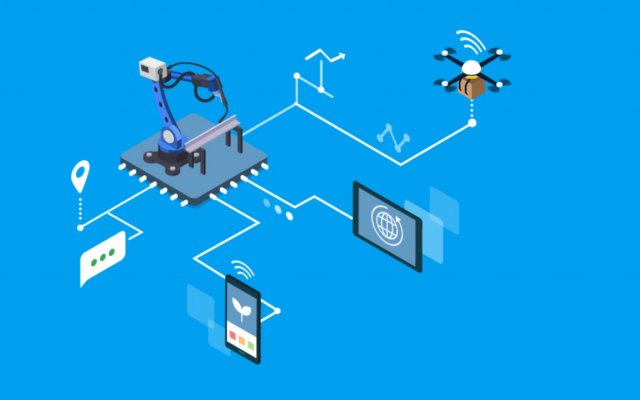
Key requirements for an MLOps foundation
AI-driven organizations are using data and machine learning to solve their hardest problems and are reaping the rewards. But creating an ML model is the easy part—operationalizing and managing the lifecycle of ML models, data and experiments is where it gets complicated.
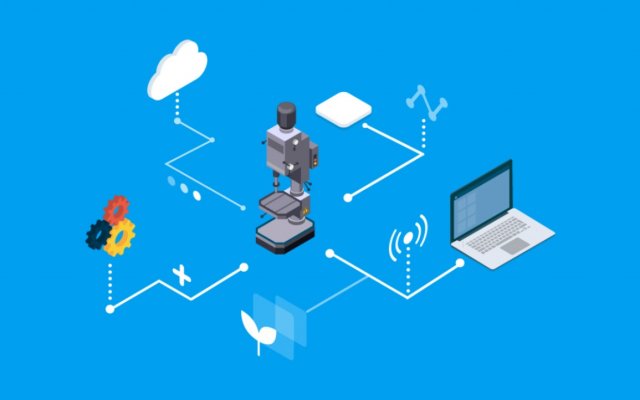
Getting started with MLOps: Selecting the right capabilities for your use case
To help ML practitioners translate the framework into actionable steps, this blog post highlights some of the factors that influence where to begin, based on our experience in working with customers.
Explainable AI
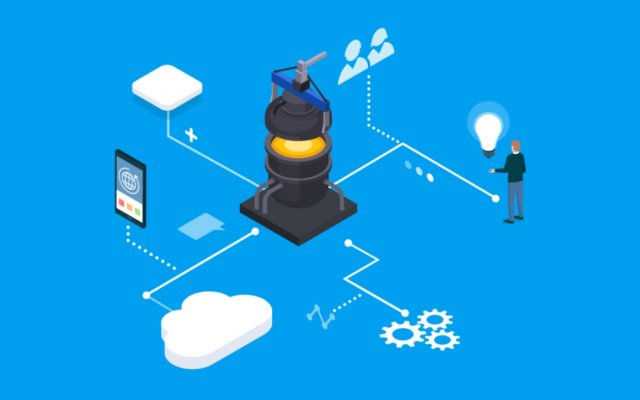
Interpreting ML models with explainable AI
We often trust our high-accuracy ML models to make decisions for our users, but it’s hard to know exactly why or how these models came to specific conclusions.
AI Explanations Whitepaper
This whitepaper is a technical reference accompanying Google Cloud's AI Explanations product. It is targeted at model developers & data scientists responsible for designing and delivering ML models. Our goal is for them to leverage AI Explanations to simplify model development as well as explain the model’s behavior to key stakeholders.
Further reading
People + AI Research
We believe that for machine learning to achieve its positive potential, it needs to be participatory, involving the communities it affects and guided by a diverse set of citizens, policy-makers, activists, artists and more. Check out the tools here.
Using AutoML for Time Series Forecasting
Current ML-based forecasting solutions are usually built by experts and require significant manual effort, including model construction, feature engineering and hyper-parameter tuning. However, such expertise may not be broadly available, which can limit the benefits of applying ML towards time series forecasting challenges.

How AutoML Vision is helping companies create visual inspection solutions for manufacturing
We consistently hear from our customers that they need new ways to apply the latest technologies, such as AI, to improve efficiency. One area that AI has proven to be particularly beneficial is in helping to automate the visual quality control process for manufacturing customers.




Your Google Cloud contacts

Clara Kobuch
Google Cloud
Enterprise Account Manager

Stiv Sterjo
Google Cloud
Smart Analytics & AI Cluster Lead, Customer Engineering

Michael Menzel
Google Cloud
Machine Learning Specialist, Customer Engineering

Markus Werdenich
Google Cloud
Enterprise Customer Engineer

Tyler Ayers
Google Cloud
Principal Customer Engineer