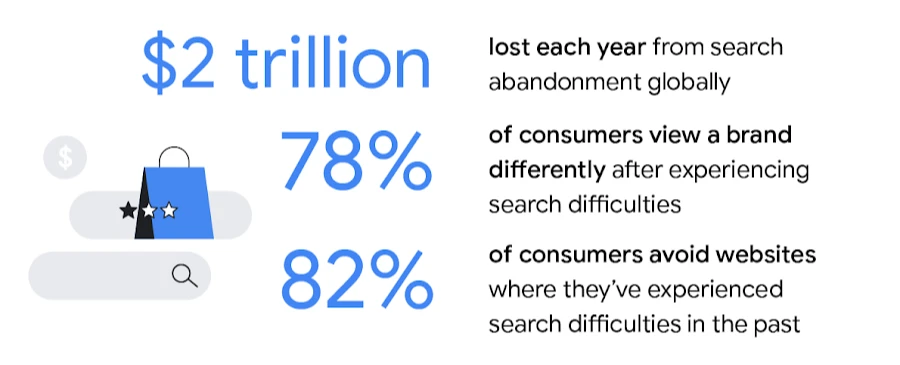
Search abandonment—when a shopper searches for a product on a retailer’s website but doesn’t find what they are looking for—costs retailers more than $2 trillion annually globally*, and more than $234 billion in the United States alone.
Today, we’re releasing new data about the impact of search abandonment, including its role in brand loyalty and shopper sentiment as uncovered by a Google Cloud-commissioned Harris Poll survey of nearly 13,500 adults over the age of 18 in 14 countries who have visited a retail website and used the search function in the past six months.
Good [and bad] search experiences have immediate impacts for retailers
The search bar is a retailer’s most important online asset
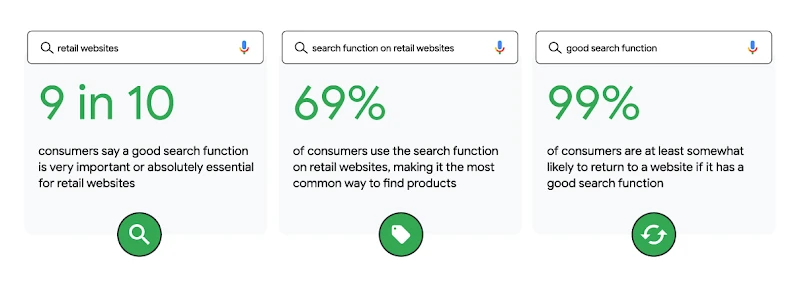
U.S. shoppers depend on the search function or search box when shopping online—it’s the most common way they search for products on retail websites (69%), followed closely by general website browsing (63%). Unsurprisingly, nearly 9 in 10 consumers (88%) say a good search function is very important or absolutely essential when visiting a retail website.
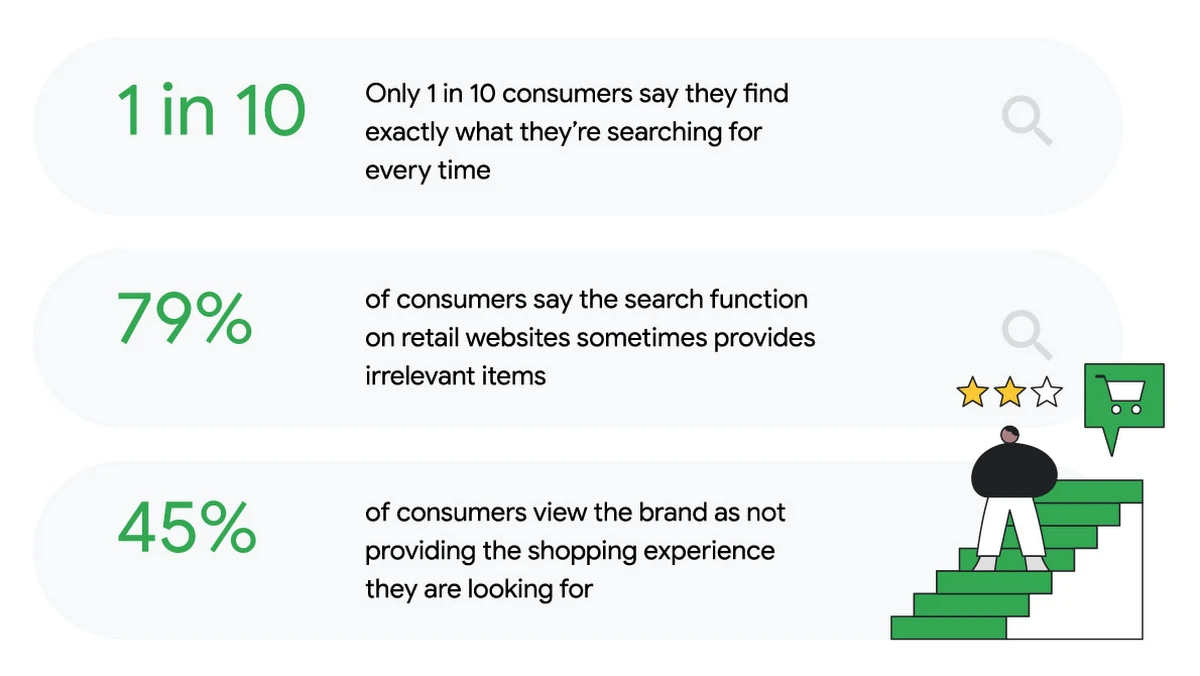
But consistency is lacking in search experiences. Only 1 in 10 U.S. shoppers say they get exactly what they are looking for (12%) or good alternatives (11%) every time they use the search function on a retailer’s site.
When surveyed in November - December 2022, more than three in four U.S. consumers (76%) said they have used the search function or search box on a retail website and it did not provide the item they were looking for; on average this happened four times that month. Globally, this number varies greatly. For example, shoppers in Japan experience unsuccessful searches around two times in a given month, while consumers in India experience far more unsuccessful searches on retail sites at five times per month.
Gone are the days where retailers can expect a customer to search, filter and refine repeatedly to find what they want. People around the world now expect site search engines to understand their intent deeply, return relevant results and help them discover new products easily with personalized recommendations.
For example, when a shopper searches for a “long floral dress with short sleeves and comfortable fit” on an ecommerce site, they expect to immediately get results for precisely that—rather than adjusting their search multiple times, or worse, giving up their shopping journeys. But it’s still a struggle for many retailers’ search engines to understand exactly what shoppers are looking for, especially without capabilities like understanding natural language. And failing to understand what shoppers are looking for comes at a cost.
Search abandonment remains pervasive, but loyalty can be won
* Local currencies in each country were converted to USD using conversion rates from March 16, 2023