
The new scene for grocery shopping
Grocery shopping has changed drastically due to COVID-19. Worldwide Google searches for ‘food delivery’ and ‘local food’ reached all-time highs in April 2020. In the UK, people were six times more likely to search for ‘veg box’ than usual. Changes that already started prior to COVID are being accelerated by the transformational time we’re in. This article elaborates on the five trends in grocery shopping: digitalisation, sustainability, innovation, demographics and experience.
Going digital
Consumers are increasingly looking for comfort and convenience. As a result, online supermarket sales have grown extensively in the past few years. According to Rabobank, online sales will account for 15-20% of total sales in 2030. This will lead to the closure of weaker stores and stores in less favorable locations. The COVID crisis has accelerated this trend, as an increasing number of consumers is shopping for their groceries online.
Dutch consumers have consistently reported two reasons to stay away from online grocery shopping: the lack of in-store experience and delivery costs. Picnic, being online only, has overcome one of these barriers. Picnic is charging no delivery costs at all and on top of that, their minimum order amount is relatively low.
The conscientious consumer
We see consumers demanding transparency and sustainability in different ways in all industries. Consumers consider the impact of production on the environment and animals and are more interested in buying local products to avoid transportation. On top of this, consumers are increasingly rejecting the use of plastic.
At Google Cloud, we are making big efforts to increase sustainability for ourselves and our clients. Recently, we partnered with WWF to create a new platform in the retail sector. This new data-enriched, decision-making platform will help drive responsible sourcing decisions in the fashion industry. Please visit our webpage to read about our other sustainability efforts.
Innovation
Tech is changing the way people do their shopping because it provides the opportunity to get groceries delivered at home. The use of temperature-controlled lockers reduces the need for specific time slots for home delivery. Supermarkets start using digital displays, color coding, and special areas to meet the customer’s requests for information richness as provided on the internet.
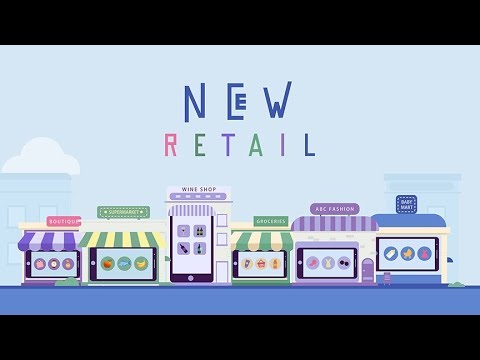
Alibaba is one of the leading companies innovating throughout their entire retail portfolio. Their New Retail is not only the online marketplace they are known for; it is also the digitization of all their shops. Alibaba supermarkets are not your usual supermarkets anymore. They are an “experience center plus consumption center plus logistics center”. The latter enables Alibaba to offer the option to get any food delivered within 30 minutes, as long as you live within 3km of their shops. This has become so popular that people have actually started moving to Alibaba’s supermarket locations. Please watch the video below to see what else Alibaba has in store.
Shopping differently
Demographics and habits are changing. A new generation is influencing grocery shopping. This group of millennials and generation Z is influenced by the incentives they see online. Also, research shows that consumers are less likely to shop only once a week. Shopping typically is done 3-5 times a week, resulting in more supermarket visits and less groceries bought at once.
Experience, experience, experience
Knowing that grocery shopping will be done increasingly online, what does that mean for the role of a physical store in the future? We see three tech-enabled trends. Firstly, customers expect a seamless integration of online and offline distribution, promotion and interaction. Omnichannel enables customers to conduct business wherever they want, whenever they want. Furthermore, analytics and loyalty programmes are used to personalize experiences. And lastly, stores will be increasingly efficient with self scanning devices and AR or increasingly convenient with shop-and-eat experiences. Please visit this Google Cloud webpage to find out about our solutions for omni-channel, analytics and efficiency.