Sovereign Controls for Google CloudToday, customers can meet many data sovereignty requirements using Google Cloud controls, delivered directly by Google Cloud through
Assured Workloads for EU or through our local partners. These Sovereign Controls can help organizations:
- Create and maintain workloads with data residency controls in Europe for core customer content at rest, with processes that help limit personnel access to core customer content to EU persons located in the EU;
- Maintain comprehensive visibility and control over administrative access to the data and workloads;
- Encrypt data with keys that they (or someone appointed by them) control and manage outside of Google’s infrastructure through our Cloud External Key Manager.
At Google Cloud we firmly believe that the control of encryption keys is the strongest and most effective technical measure against extraterritorial requests for data that can be offered to cloud customers today. To achieve sufficient control, keys must be kept outside of the cloud provider infrastructure and coupled to a strong
key access justification mechanism.
Queck added that Sovereign Controls can help balance data management and control requirements with the drive to innovate. “With Sovereign Controls by T-Systems, we have developed a cloud solution that allows you to securely host your sensitive data and implement supplementary data protection measures that can help meet the requirements of European data protection authorities without losing on scalability or elasticity. In other words, you retain full control over your data, software, and operations, and still benefit from all the advantages of the Google Cloud - especially the innovation power,” he said.
Sovereign Controls for Google WorkspaceCustomers’ sovereignty requirements also extend to the digital tools they use to collaborate and communicate. We recently announced
Sovereign Controls for Google Workspace, which will provide digital sovereignty capabilities for organizations to control, limit, and monitor transfers of data to and from the EU starting at the end of 2022, with additional capabilities delivered throughout 2023. This commitment builds on existing
Client-side encryption, Data regions, and
Access Controls capabilities in Workspace.
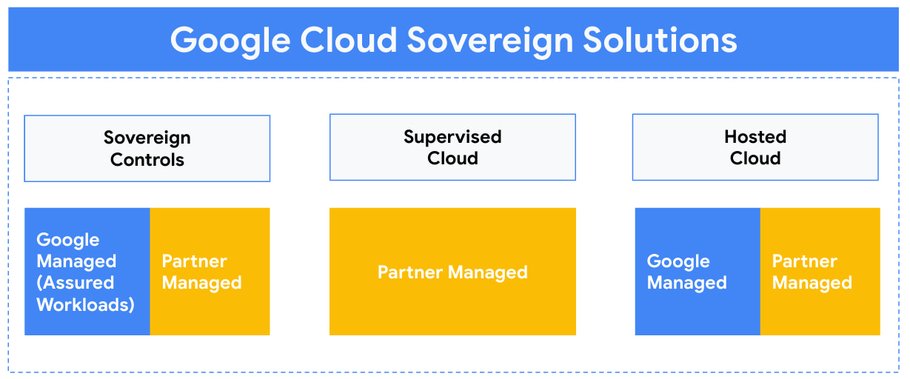 The range of Google Cloud Sovereign Solutions